
Saudi Arabian cuisine is a celebration of heritage, hospitality, and the rich flavors of the Arabian Peninsula. Rooted in Bedouin traditions and influenced by centuries of trade and cultural exchange, Saudi food reflects generosity and a deep love for gathering. Every meal tells a story—of desert life, of spice routes, and of a culture where sharing food is an expression of warmth and respect.
One of the most iconic dishes in Saudi Arabia is Kabsa, a fragrant rice meal typically cooked with lamb or chicken, seasoned with a blend of aromatic spices like cardamom, cinnamon, and cloves. Often garnished with nuts and raisins, Kabsa is a centerpiece at gatherings and celebrations, symbolizing unity and abundance. Closely related is Mandi, originally from Yemen but embraced across the Kingdom, where meat is slow-cooked to tenderness in an underground oven, infusing the rice with rich, smoky flavor.
Bread plays a key role in daily dining, especially Tamees and Khubz, often served straight from the oven and used to scoop up stews like Margoog, a dish of braised meat and vegetables cooked with pieces of thin dough that absorb savory broth. In the western regions, travelers will find Saleeg, a creamy rice dish similar to risotto but cooked with milk and chicken stock—smooth, comforting, and especially popular in Jeddah and Taif.
For those exploring the Kingdom’s sweeter side, Saudi desserts are as delightful as they are meaningful. Luqaimat, golden dough balls drizzled with date syrup or honey, are a beloved Ramadan treat, crisp on the outside and soft inside. Kunafa, a pastry layered with cheese or cream and soaked in syrup, offers a decadent indulgence found in many bakeries. Dates themselves are a national treasure, enjoyed in countless varieties and often served with Arabic coffee—a ritual that reflects Saudi generosity and tradition.
The coastal city of Jeddah brings the sea into the culinary picture. Fresh seafood dishes—grilled fish spiced with local blends, shrimp kabsa, and hearty seafood stews—highlight the Red Sea’s influence on Saudi cuisine. In the central desert regions, camel meat dishes remain part of heritage celebrations, while mutabbaq, a stuffed pastry often sold by street vendors, showcases the multicultural flavors introduced through ancient maritime trade.
Beverages complement the experience, especially the iconic Gahwa (Saudi coffee). Lightly roasted and infused with cardamom, it is poured from a traditional dallah pot into small cups as a symbol of respect. Mint tea, fresh juices, and hibiscus drinks known as Karkadeh provide refreshing options in the warm climate.
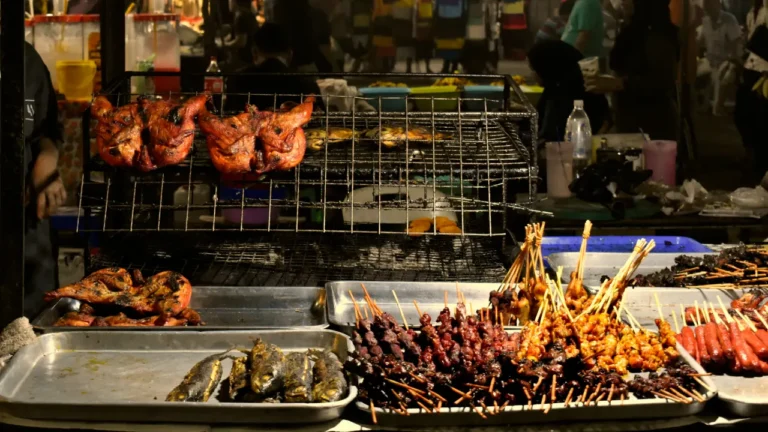
To taste Saudi Arabia is to understand its culture of togetherness. Meals are shared, traditions are honored, and every dish carries the warmth of hospitality. Whether enjoying Kabsa in a family home, tasting street snacks in a lively souk, or savoring dates under desert skies, travelers quickly discover that food here is more than nourishment — it is a welcoming invitation into the heart of Saudi life.